AI Summary




TL;DR
- Pipedrive is still a strong sales CRM. Not every frustration means you need an alternative to Pipedrive.
- Before switching, figure out whether the problem is Pipedrive or your CRM configuration. Dirty data, broken integrations, and field bloat make any CRM feel broken.
- HubSpot fits sales-and-marketing alignment. Zoho CRM offers deep customization at lower cost. Close is purpose-built for phone-heavy outbound. Salesforce handles enterprise complexity. Salesmate covers multichannel communication. Attio offers a flexible modern data model.
- Compare CRM pricing at the plan tier where your required features actually live, not the advertised entry price.
- Migration costs more than the subscription. Data mapping, integration rebuilding, and workflow automation recreation are part of the real price.
What happens when a CRM that was built to simplify sales becomes the system your entire business depends on?
Pipedrive remains excellent at visual pipeline management and activity-driven selling. But as teams grow, the CRM may be expected to handle much more: deeper automation, complex data structures, marketing, governance, and workflows beyond sales.
That does not automatically mean it is time to switch. In our CRM consulting work, we often find that what looks like a platform limitation is actually a configuration, process, or data-structure problem.
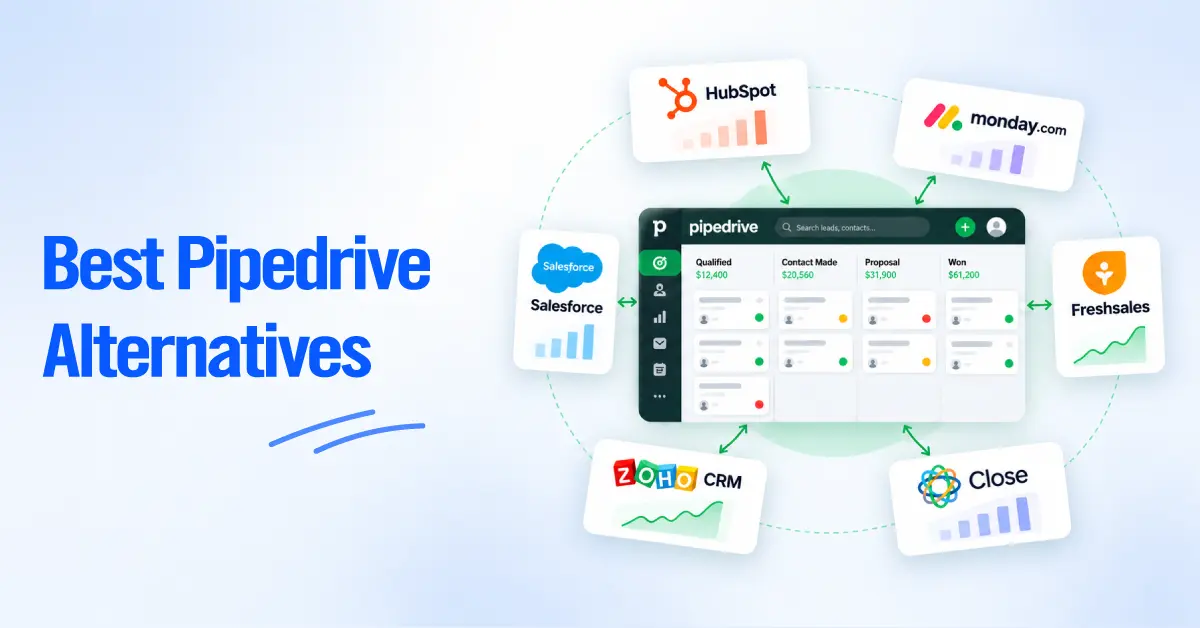
The right Pipedrive alternative depends on what your business has actually outgrown. The comparison below gives you a quick view of the leading Pipedrive alternatives in 2026 and where each one fits.
Pipedrive vs. Top Competitors: Quick Comparison
| CRM | Best For | Main Advantage | Main Tradeoff |
| HubSpot | Connected sales and marketing | Unified customer platform across hubs | Key features gate to Professional ($90+/seat); onboarding fees apply |
| Zoho CRM | Value and broad customization | Deep features and ecosystem from $14/user/mo | Configuration and admin complexity scale with the feature set |
| Close | Calling-heavy outbound sales | Native power dialer, SMS, and call recording | Calling features need Growth ($99/user/mo); phone credits billed separately |
| Salesforce | Enterprise sales operations | Unmatched customization, governance, and ecosystem | Requires dedicated admin; Enterprise starts at $175/user/mo |
| monday CRM | Sales + project delivery | Sales and operational workflows in one platform | CRM features less mature than purpose-built sales tools |
| Freshsales | Integrated sales automation and AI | Free plan available; Freddy AI on Pro tier | Sequences and AI scoring require Pro ($39/user/mo), not the $9 entry |
| Copper | Google Workspace teams | Deep Gmail integration with auto-captured activity | Locked to Google Workspace; Professional ~$59/user/mo for full features |
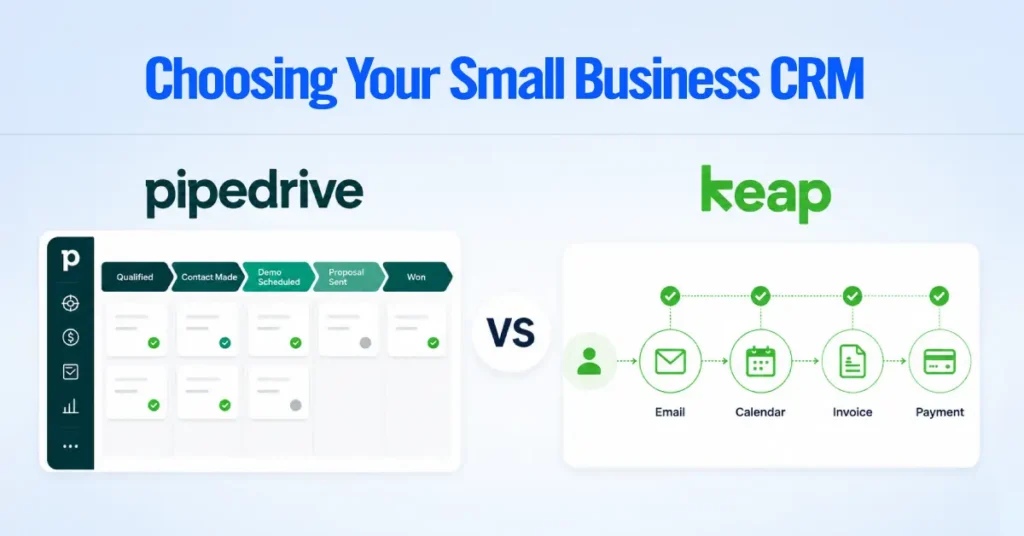
| Keap | SMB follow-up and marketing automation | All-in-one CRM, email marketing, invoicing, automation | Starts at $249/mo with mandatory $500 onboarding; not a pure sales CRM |
| Salesmate | Multichannel sales communication | Built-in calling, SMS, email, and sequences | AI and sequences locked to Pro ($39/user/mo); telephony charges add up |
| Attio | Flexible GTM data workflows | Custom objects, relationship intelligence, modern data model | Younger ecosystem; sequences only on Pro ($69/seat/mo) |
There is no universal winner here. The best Pipedrive alternative depends entirely on the requirement Pipedrive cannot satisfy.
How We Evaluated These CRM Alternatives
We compared each CRM across the areas that matter most when replacing Pipedrive:
- Core CRM capabilities: Pipeline management, automation, communication, reporting, and marketing
- Platform fit: Integrations, AI, customization, and scalability
- Practical considerations: Implementation complexity, migration effort, pricing, and overall business fit
We used official product documentation as the primary source for factual claims. Our CRM consulting experience also informs the practical analysis, particularly around implementation, integrations, and CRM data quality.
Should You Leave Pipedrive or Fix What You Have?
Before switching CRMs, determine whether the problem is Pipedrive itself or how you’ve configured it.
| Situation | Best approach |
| Pipedrive still fits your sales process, but usage is inconsistent | Stay |
| Data, fields, pipelines, automations, or integrations are creating friction | Optimize |
| You need capabilities Pipedrive is not designed to provide | Switch |
Stay with Pipedrive CRM
If your team mainly needs visual pipeline management, deal tracking, activity management, and a straightforward sales CRM, Pipedrive may still be a good fit. If the problem is inconsistent usage or messy data, changing platforms will not automatically fix it.
Optimize Pipedrive Before Switching CRM Software
If the underlying platform fits but the setup has become difficult to manage, start with configuration. In one of our Pipedrive environments, we reduced custom fields from 91 to 65, consolidated Lead Source options from 42 to 19, and made 207 configuration changes without changing the platform itself.
Switch When the Gap Is Structural
Consider an alternative to Pipedrive when your requirements extend beyond what Pipedrive is designed to handle, such as broader marketing automation, enterprise governance, complex data models, native multichannel communication, or connected project workflows.
The goal isn’t to find a CRM with more features. It is to find the right CRM that better fits the way your business actually operates.
Top 10 Pipedrive Alternatives in 2026
No single Pipedrive replacement is best for every business. The right choice depends on what you need beyond pipeline management, whether that is deeper automation, connected marketing, enterprise controls, multichannel sales, or more flexible data and workflows.
| Note: We compare plans based on the capabilities a business actually needs, not the lowest advertised entry price. A $9/user/month plan may not include the functionality that makes a CRM a realistic Pipedrive replacement. Pricing and features last verified September 2026. |
1. HubSpot CRM: Best for Connected Sales and Marketing
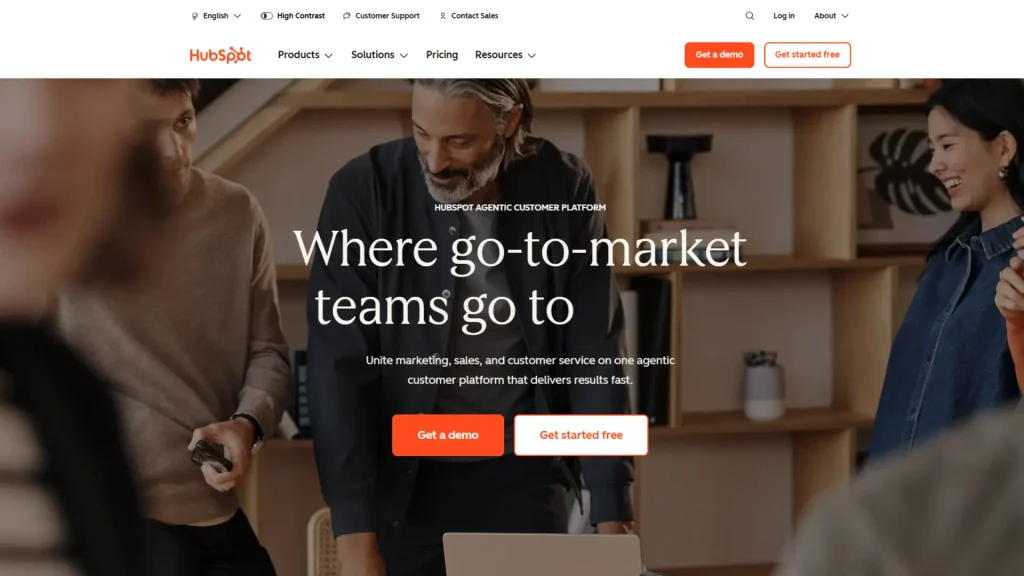
HubSpot makes the most sense when the CRM needs to connect sales and marketing and customer data, rather than primarily manage a sales pipeline. Its advantage over Pipedrive is the ability to connect lifecycle data, marketing activity, sales processes, and reporting around the same customer record.
The tradeoff is cost and implementation complexity. Sales Hub Professional starts at $90/seat/month when billed annually, plus a required $1,500 onboarding fee.
Choose HubSpot if: sales and marketing need shared lifecycle data, automation, and reporting.
Stay with Pipedrive if: sales is the primary CRM use case and your existing marketing stack already works well alongside it.
2. Zoho CRM: Best Pipedrive Alternative for Value and Deep Customization

Zoho CRM is a strong Pipedrive CRM alternative when customization, breadth, and cost matter more than having the simplest possible CRM. Its automation, process management, reporting, customization, and wider Zoho ecosystem give businesses more room to build around their own processes.
The tradeoff is implementation effort. Zoho CRM offers more configuration decisions across modules, fields, processes, automation, and permissions than a focused sales CRM.
Choose Zoho CRM if: you need deeper customization or want to consolidate more business functions.
Stay with Pipedrive if: fast setup and low administrative overhead matter more than configurability.
3. Close: Best for Calling-Heavy Outbound Sales
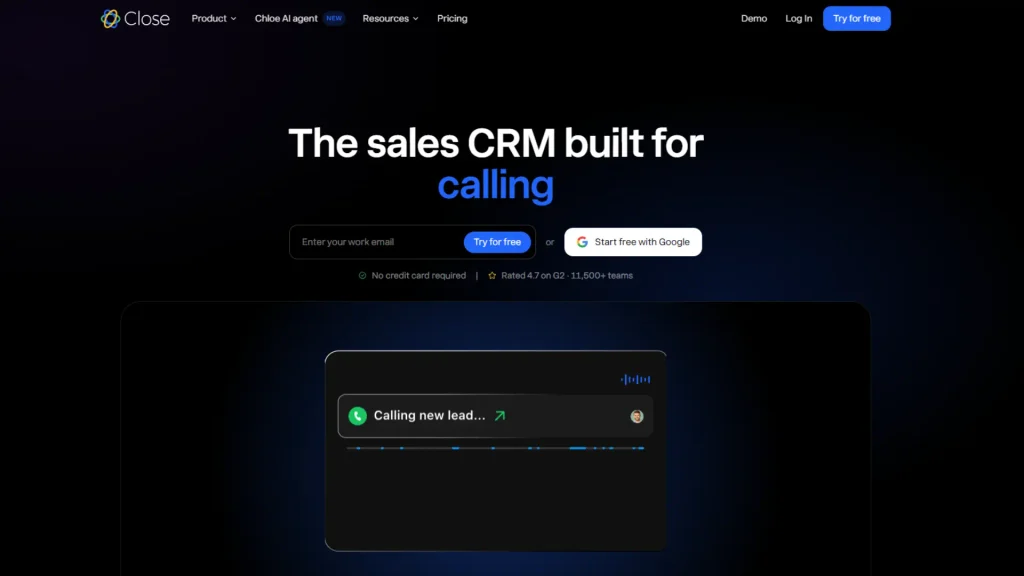
Close is a strong alternative when calling and multichannel outreach are central to the sales process. Calling, email, SMS, workflows, and pipeline management are built into the same sales CRM rather than assembled around it.
That difference also matters for implementation. A phone integration can exist without producing clean activity data. In one anonymized engagement, we saw a phone integration create duplicate activity records for the same call, inflating activity reporting.
Close’s Growth plan is $99/user/month when billed annually and includes automated workflows and the Power Dialer.
Choose Close if: outbound calling and multichannel sales communication are core to your sales motion.
Stay with Pipedrive if: your process is more relationship- and pipeline-driven than communication-heavy.
4. Salesforce: Best CRM for Complex Enterprise Sales Operations

Salesforce becomes more compelling when the CRM has to support complex business rules, multiple teams, governance, and highly customized processes. Its value over Pipedrive comes less from basic pipeline management and more from how deeply the system can be configured around an organization’s operating structure.
That flexibility comes with more administration. Salesforce suits organizations that genuinely need advanced permissions, forecasting, APIs, complex processes, or enterprise-level controls.
Sales Cloud Enterprise is currently $175/user/month when billed annually.
Choose Salesforce if: enterprise governance and deep customization justify the additional administration.
Stay with Pipedrive if: your sales process is straightforward enough that enterprise-level complexity would add more overhead than value.
5. monday CRM: Best for Connecting Sales With Project Delivery

monday CRM becomes interesting when closing a deal is only the beginning of the workflow. Because monday CRM and work management sit within the monday.com environment, teams can connect sales records with the work that follows.
That makes it relevant for businesses where the sales-to-delivery handoff is a recurring source of friction. The value is not simply another CRM view; it is connecting commercial and operational workflows.
Current annual pricing is $12/user/month for Basic, $17/user/month for Standard, and $28/user/month for Pro.
Choose monday CRM if: sales and project delivery need connected workflows in one platform.
Stay with Pipedrive if: dedicated pipeline management is the primary requirement.
6. Freshsales: Best for Sales Automation and Communication
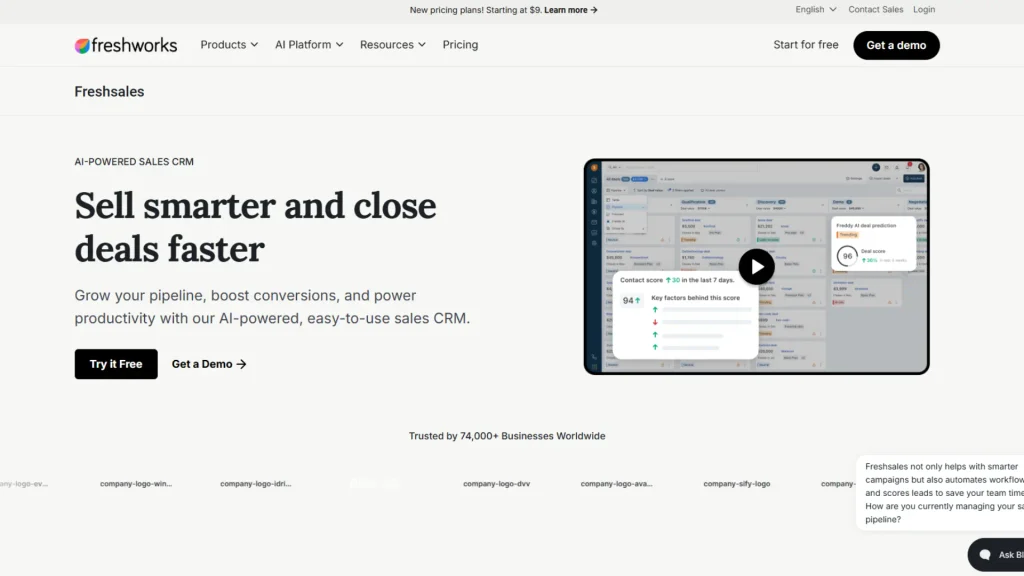
Freshsales is a practical alternative for teams that want CRM, email, phone, and sales automation in one platform. Its Pro tier adds contact scoring, deal insights, territory management, and sales sequences.
The pricing distinction matters. Freshsales starts at $9/user/month annually, while Pro is $39/user/month and adds capabilities better suited to a growing sales operation.
AI is also only as useful as the data behind it. Scoring and insights cannot compensate for duplicate records, inconsistent lifecycle data, or poorly defined sales stages.
Choose Freshsales if: you want communication, automation, and AI-assisted capabilities in one CRM.
Stay with Pipedrive if: you prefer a more focused, pipeline-first experience.
7. Copper: Best CRM for Google Workspace-Centric Teams
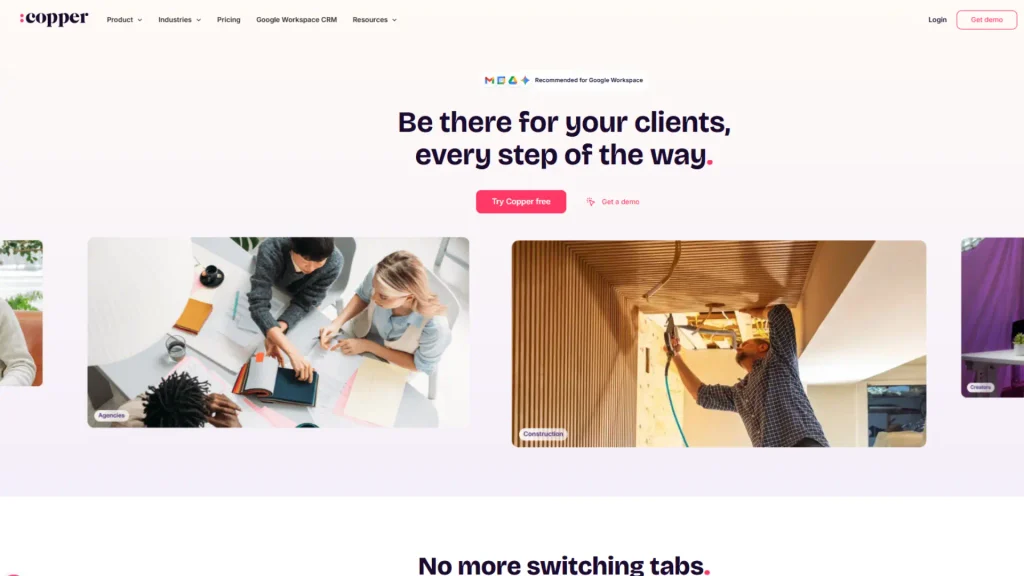
Copper’s biggest advantage is how closely the CRM fits into Google Workspace. For teams that handle most customer communication through Gmail and Google Calendar, that can reduce the work of keeping CRM records up to date.
This makes Copper a different proposition from Pipedrive. Its value comes from fitting the CRM into an existing Google-centric workflow rather than asking users to work primarily inside a separate sales platform.
Copper’s Professional plan is $59/user/month when billed annually and adds workflow automation, bulk email, reporting, and integrations.
Choose Copper if: Google Workspace is central to your team’s daily sales workflow.
Stay with Pipedrive if: you need a more platform-independent CRM focused on dedicated pipeline management.
8. Keap: Best for Small Business CRM and Marketing Automation
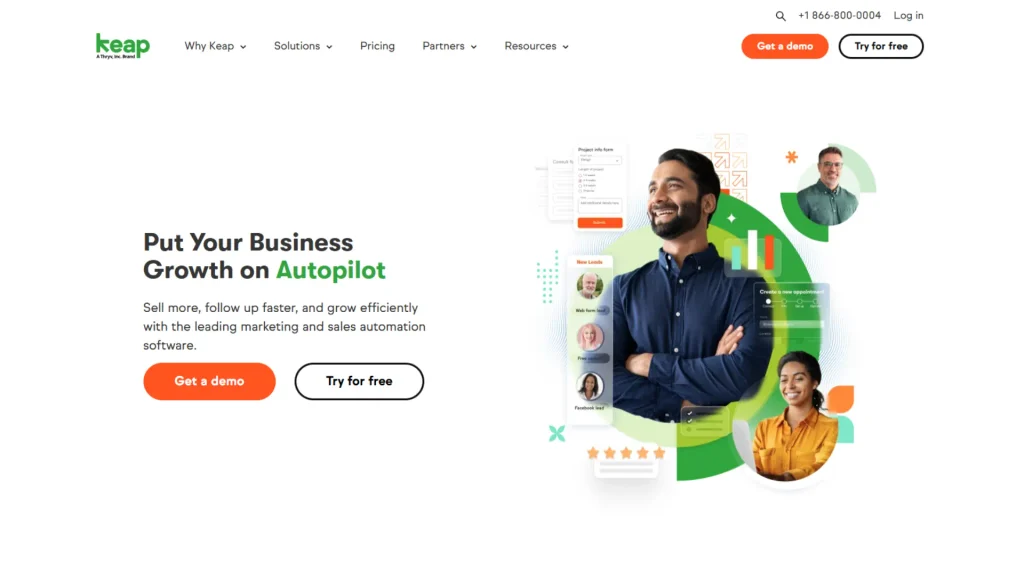
Keap is less of a direct Pipedrive replacement and more of a small-business CRM and automation platform. Its value comes from combining CRM with marketing automation and business processes such as payments and invoicing.
That makes it relevant when the problem with Pipedrive is the number of separate tools surrounding the sales process. A business that can genuinely consolidate several workflows may get more value from Keap than a team that only needs pipeline management.
Choose Keap if: you want CRM, marketing automation, and business processes consolidated in one platform.
Stay with Pipedrive if: you prefer a focused sales CRM with specialized tools alongside it.
9. Salesmate: Best for Multichannel Sales Communication
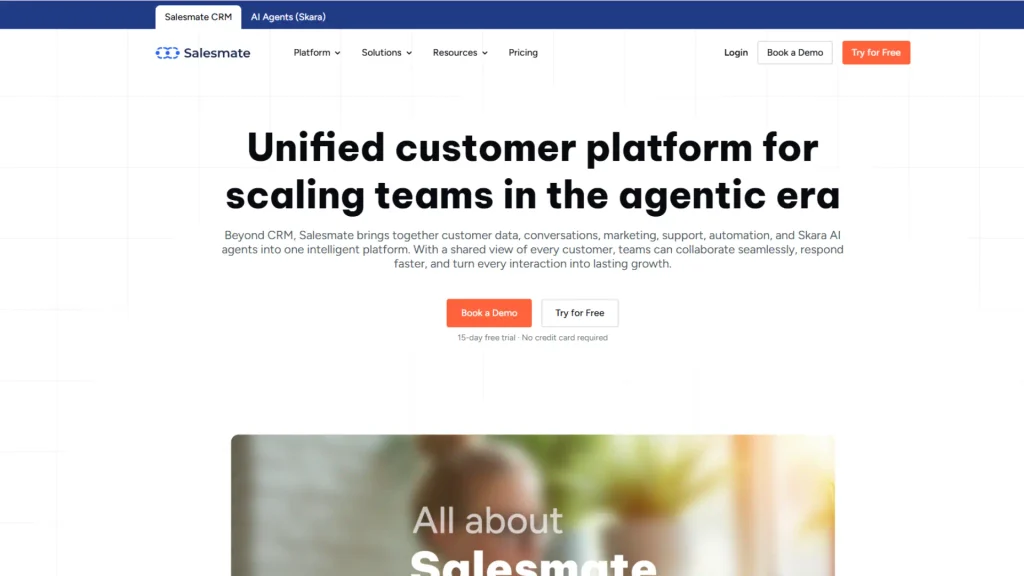
Salesmate is worth considering when phone, SMS, email, and automated follow-up are central to the sales process. Its CRM combines pipeline management with communication and sales automation, so you don’t have to manage each channel separately.
Basic starts at $23/user/month, while Pro is $39/user/month and adds sequences and other advanced capabilities. Communication usage can add costs beyond the seat price.
Choose Salesmate if: phone, SMS, and email are all important parts of your sales motion.
Stay with Pipedrive if: your team is primarily pipeline-driven and communication volume is moderate.
10. Attio: Best for Flexible GTM Data Models
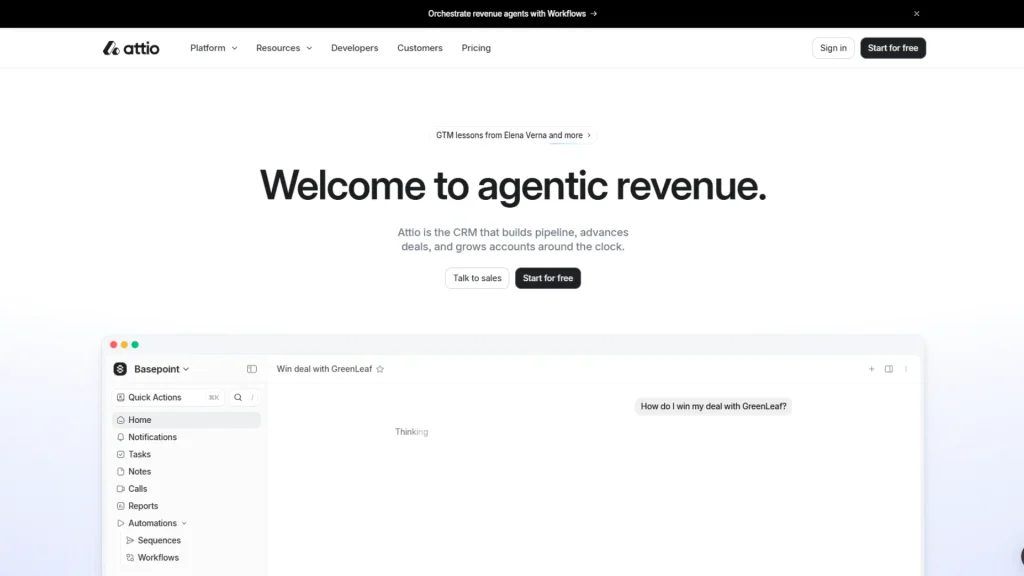
Attio takes a different approach to CRM architecture. Its flexible data model lets teams structure records, relationships, and custom objects around how their business actually works rather than relying only on a conventional CRM structure.
That flexibility helps businesses whose go-to-market process doesn’t fit neatly into a traditional pipeline. It also requires more upfront design because teams need to decide how their objects, relationships, data, and workflows should work.
Attio’s annual pricing is $35/user/month for Plus and $79/user/month for Pro. Pro adds capabilities including sequences, advanced reporting, and permission controls. Attio also uses credits for AI and other usage-based capabilities.
Choose Attio if: your GTM operation needs a flexible data model beyond a conventional sales pipeline.
Stay with Pipedrive if: you want a structured CRM that requires less upfront system design.
Choose Pipedrive if You Want a Simple Sales CRM
Pipedrive is a strong choice when your team needs a focused sales CRM built around pipeline and activity management. Its visual pipeline makes deal progression easy to understand, while activity-based selling keeps sales reps focused on the next action.
The bigger advantage is operational simplicity. Compared with platforms such as Salesforce, Zoho, or HubSpot, Pipedrive often requires less configuration and administration when the business doesn’t need complex data structures, enterprise governance, or a broad marketing stack.
Choose Pipedrive when sales execution is the priority and simplicity has more value than having every function in one platform.
Where Pipedrive CRM Falls Short
Pipedrive becomes less suitable when the business needs CRM features beyond a focused sales CRM:
- Marketing: Native marketing is limited compared with dedicated marketing automation platforms.
- Communication: Calling and SMS typically require third-party integrations.
- Reporting: Its reporting and forecasting may not meet teams with complex analytics and forecasting requirements.
- Data architecture: Pipedrive does not support the same level of custom objects and complex data modeling available in platforms such as Salesforce.
- Pricing: There is no free plan beyond the 14-day free trial, which can matter for very small teams.
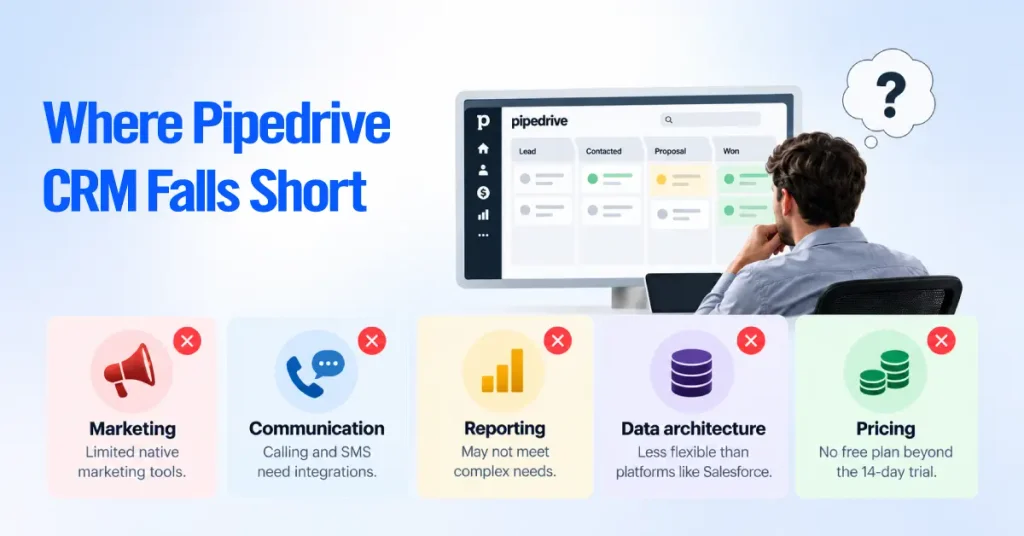
These limitations do not make Pipedrive a bad CRM. They define the type of business it fits best. If your requirements have moved beyond focused sales execution, ask whether configuring around those gaps is still practical or whether another CRM solution better fits your operating model.
What Does CRM Pricing and Switching Actually Cost?
The subscription price is the most visible cost of changing CRMs, but it is rarely the full cost. A realistic first-year estimate should account for:
- Per-seat pricing at the tier that actually provides the required capabilities
- Add-ons for functionality that is not included
- Implementation and configuration
- Data migration and field mapping
- Integration rebuilding and testing
- Automation recreation
- User training
- Ongoing administration
That is why a CRM that costs $20 less per user each month may not be cheaper once you include implementation and migration.
Compare the total first-year cost, not just the advertised subscription price. The right alternative delivers the required capabilities without creating disproportionate implementation and maintenance overhead.
Free Pipedrive Alternative for a Small Team
Pipedrive does not offer a free plan. These CRMs currently do.
| CRM | Free Users | What You Get | What You Do Not Get |
| HubSpot | Unlimited (with limits) | Contact management, deal tracking, email scheduling | Sequences, meaningful automation, custom reporting |
| Zoho CRM | Up to 3 | Leads, contacts, deals, basic reports | Workflow automation, email integration, forecasting |
| Freshsales | Up to 3 | Contacts, accounts, built-in phone | Sequences, AI features, custom reports |
| Attio | Up to 3 seats | Contacts, companies, limited custom objects | Advanced automation, sequences, full AI credits |
These options can serve as a free CRM for evaluation and solo use, but typically exclude the automation and reporting growing teams need.
Choose the Best Pipedrive Alternative for Your Sales Process
There is no universal winner. The right Pipedrive alternative depends on the specific requirement your current CRM cannot satisfy.
- Stay with Pipedrive if visual pipeline management and activity-driven selling are the core needs and the platform still fits your process.
- Consider HubSpot if sales and marketing need a shared CRM platform.
- Consider Close if phone-based outbound is the primary selling motion.
- Consider Salesforce if enterprise complexity and governance justify the investment.
- Consider Zoho CRM if broad customization at lower cost is the priority.
- Consider Salesmate if multichannel communication needs to live inside the CRM.
- Consider Attio if your GTM motion requires flexible data modeling beyond traditional pipeline structures.
Before committing to a migration, identify the actual problem. If it is a platform limitation, the top Pipedrive alternatives above specifically address different gaps. If it is configuration, data, or technical debt, fixing the existing environment may be the better investment.
If you’re looking for a Pipedrive alternative, don’t start by asking which CRM has the most features. Start with the requirements your current system can’t meet, the integrations your sales team depends on, and the workflows that need to run reliably. That gives you a much better basis for choosing a CRM that fits.