AI Summary





Your sales pipeline is the single most reliable predictor of future revenue, yet most teams treat it like a static spreadsheet rather than a living growth engine. According to recent industry data, 63% of sales managers admit their organizations do a poor job managing their pipeline, while companies that optimize pipeline management practices grow 28% faster than their peers.
The gap between struggling teams and high-performers rarely comes down to effort. It comes down to process. The right strategies turn a leaky pipeline into a predictable revenue machine, and that’s exactly what this guide will help you build.
Below, you’ll find 12 actionable strategies to improve your sales pipeline, eliminate bottlenecks, shorten your sales cycle, and close more deals with confidence.
Key Takeaways
- Define pipeline stages by buyer actions, not internal seller activities.
- Prioritize high-intent leads and disqualify dead deals without hesitation.
- Track weekly metrics like coverage ratio, velocity, and conversion rates.
- Maintain pipeline hygiene through consistent CRM updates and routine cleanups.
- Shorten sales cycles by removing friction, not by pressuring buyers.
- Standardize winning processes and automate repetitive tasks for scalable growth.
- Coach reps using pipeline data to fix specific execution gaps.
Quick Summary
Improving your sales pipeline starts with treating it as a living revenue system rather than a static deal list. A healthy pipeline depends on clearly defined stages tied to buyer actions, disciplined qualification, and consistent hygiene that keeps forecasts accurate and trustworthy.
This guide outlines 12 proven strategies that cover the full pipeline lifecycle. The strategies span prioritization, follow-up cadence, disqualification, metrics tracking, cycle shortening, process standardization, content delivery, CRM adoption, automation, and data-driven coaching. Together, they create a system where each stage feeds the next with quality opportunities.
The most successful sales teams in 2026 are the ones that combine clean data with structured execution. By tightening qualification, tracking the right weekly metrics like pipeline coverage and sales velocity, and using your CRM as the single source of truth, you turn unpredictable selling into a repeatable revenue engine. Apply these strategies as a connected system, and your pipeline will move from a forecasting headache to your most reliable growth asset.
What Is a Sales Pipeline?
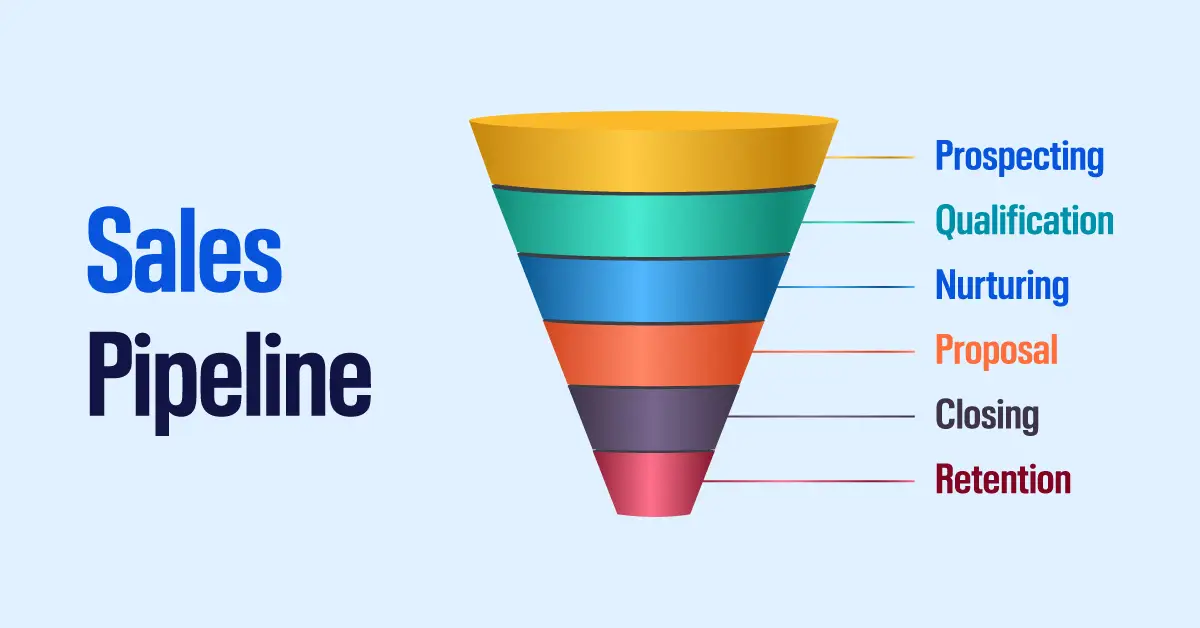
A sales pipeline is a visual, structured representation of every potential deal in your sales process, mapped across clearly defined stages from first contact to closed-won. It shows where each prospect stands, what action moves them forward, and how close your team is to hitting revenue targets.
Think of your sales pipeline as a revenue roadmap. It tells you:
- How many active deals are in motion
- Which stage each opportunity occupies
- What needs to happen to advance each deal
- How likely your team is to hit quota this quarter
A well-managed pipeline isn’t just an organizational tool. It’s a forecasting instrument, a coaching guide, and a strategic asset that powers every meaningful revenue decision.
Why Improving Your Sales Pipeline Matters
Improving your sales pipeline directly impacts revenue growth, forecast accuracy, and your team’s ability to scale predictably. When your pipeline runs clean and consistent, you stop guessing and start operating on evidence.
Here’s what a stronger pipeline delivers:
- Accurate revenue forecasting that leadership can actually trust
- Faster sales cycles because deals don’t stall in undefined stages
- Higher win rates through better prioritization and qualification
- Earlier risk detection before stalled deals quietly tank your quarter
- Smarter resource allocation across reps, territories, and segments
Without pipeline discipline, sellers waste time on dead deals, managers misforecast targets, and leadership loses confidence in the numbers. Fixing the pipeline fixes nearly every downstream problem.
12 Strategies to Improve Your Sales Pipeline
The following 12 strategies cover the entire pipeline lifecycle, from prospecting to close. Apply them as a system rather than picking favorites, since pipeline health depends on each stage feeding the next.
1. Define Your Pipeline Stages With Precision

Clearly defined pipeline stages are the foundation of every high-performing sales process. Vague stage definitions create inconsistent reporting, inflated forecasts, and reps who interpret “qualified” or “proposal” however suits them.
Map each stage to a specific buyer action, not a seller activity. For example:
- Prospecting: Initial contact attempted
- Qualification: Budget, authority, need, and timeline confirmed
- Demo/Discovery: Solution presented to decision-maker
- Proposal: Formal pricing and terms delivered
- Negotiation: Contract terms under review
- Closed-Won/Lost: Final decision recorded
Every rep on your team should answer the same question the same way: “Why is this deal in this stage?” When the answer is consistent, your pipeline becomes reliable.
2. Prioritize High-Intent, High-Value Opportunities
Not every lead deserves equal attention, and chasing every name in your CRM is the fastest way to dilute your pipeline. Top sellers focus their energy on opportunities that match both fit and intent.
Start by analyzing historical data to identify your winning patterns:
- Win rates by company size, industry, or acquisition channel
- Average deal size and lifetime value by buyer persona
- Sales velocity across segments
Then build a lead-scoring system that surfaces your best-fit opportunities automatically. Your reps should always know which five deals to work first on any given morning.
3. Build a Follow-Up Cadence That Actually Sticks
A disciplined follow-up cadence is what separates closed deals from ghosted ones. Research consistently shows it takes 8+ touchpoints to close a B2B deal, yet 44% of salespeople give up after a single follow-up.
The fix isn’t more grit. It’s a system. Build follow-up sequences that:
- Trigger automatically based on prospect behavior
- Mix channels (email, phone, LinkedIn, video) across touchpoints
- Include clear next steps in every interaction
- Use CRM reminders so nothing slips
When follow-up becomes a process rather than a memory test, your pipeline stays warm and your win rates climb.
4. Disqualify Dead Deals Faster
Disqualifying weak deals is just as valuable as qualifying strong ones. Stalled opportunities clog your pipeline, distort your forecast, and steal hours from deals that actually have a chance.
Watch for clear disqualification signals:
- No defined budget, decision-maker, or timeline
- Repeated reschedules or radio silence
- Misalignment between their needs and your solution
- Stuck in the same stage for 2x your average cycle length
Removing dead weight isn’t pessimism. It’s discipline. A leaner pipeline is almost always a healthier one.
5. Track the Metrics That Actually Move Revenue
The right pipeline metrics tell you exactly where your sales process is winning and where it’s leaking. Most teams drown in dashboards full of vanity numbers, while ignoring the handful of KPIs that drive decisions.
Focus on these high-impact metrics:
- Pipeline coverage ratio (pipeline value ÷ quota)
- Stage-to-stage conversion rates
- Average deal size by segment
- Sales velocity (deals × value × win rate ÷ cycle length)
- Forecast accuracy versus actual close
- Deal aging by stage
Review these weekly with your team, not quarterly with leadership. Pipeline problems compound fast when nobody’s watching.
6. Keep Your Pipeline Clean and Current

Pipeline hygiene is the unglamorous habit that separates accurate forecasts from wishful thinking. Outdated close dates, ghost opportunities, and stale notes silently destroy your team’s credibility with leadership.
Build a weekly hygiene routine that includes:
- Updating close dates and deal values to reflect reality
- Removing or re-engaging deals stalled past your average cycle
- Adding notes from the most recent buyer interaction
- Reassigning ownership when reps change accounts
- Flagging deals with no activity in 14+ days
A clean pipeline takes 30 minutes a week to maintain and saves entire quarters from preventable forecast misses.
7. Shorten Your Sales Cycle Without Rushing the Buyer
A shorter sales cycle compounds into more closed deals, faster revenue, and reduced risk of competitors slipping in. Roughly 27% of sales reps cite long sales cycles as their biggest barrier to quota.
Speed up your cycle by removing friction, not by pressuring buyers:
- Share pricing and ROI calculators earlier in the conversation
- Send case studies that match the buyer’s industry upfront
- Confirm next steps during every call, never after
- Use mutual action plans to align both sides on the path to close
- Eliminate redundant approval steps on your own side
The goal isn’t to push harder. It’s to make “yes” easier than “let me think about it.”
8. Standardize What Works Across Your Team
Standardized sales processes turn individual top-performer behavior into repeatable team performance. When every rep runs a different playbook, scaling becomes nearly impossible and coaching becomes guesswork.
Document and standardize:
- Discovery questions and qualification frameworks
- Email templates and outreach sequences
- Objection-handling responses
- Demo flows and proposal structures
- Stage-exit criteria
Standardization doesn’t mean robotic. It means giving every rep a proven baseline they can personalize on top of.
9. Equip Buyers With the Right Content at Every Stage
Strategic content delivery accelerates pipeline velocity by helping buyers self-educate and build internal consensus. Despite 95% of sales reps confirming that content influences deals, only 27% actively collaborate with marketing on it.
Match content to pipeline stage:
- Early stage: Blog posts, industry reports, problem-framing guides
- Mid stage: Product walkthroughs, ROI calculators, use cases
- Late stage: Customer case studies, implementation guides, references
Track which assets show up most often in won deals, then double down on them. The right content at the right moment can collapse weeks off your sales cycle.
10. Use a CRM to Drive Visibility and Consistency
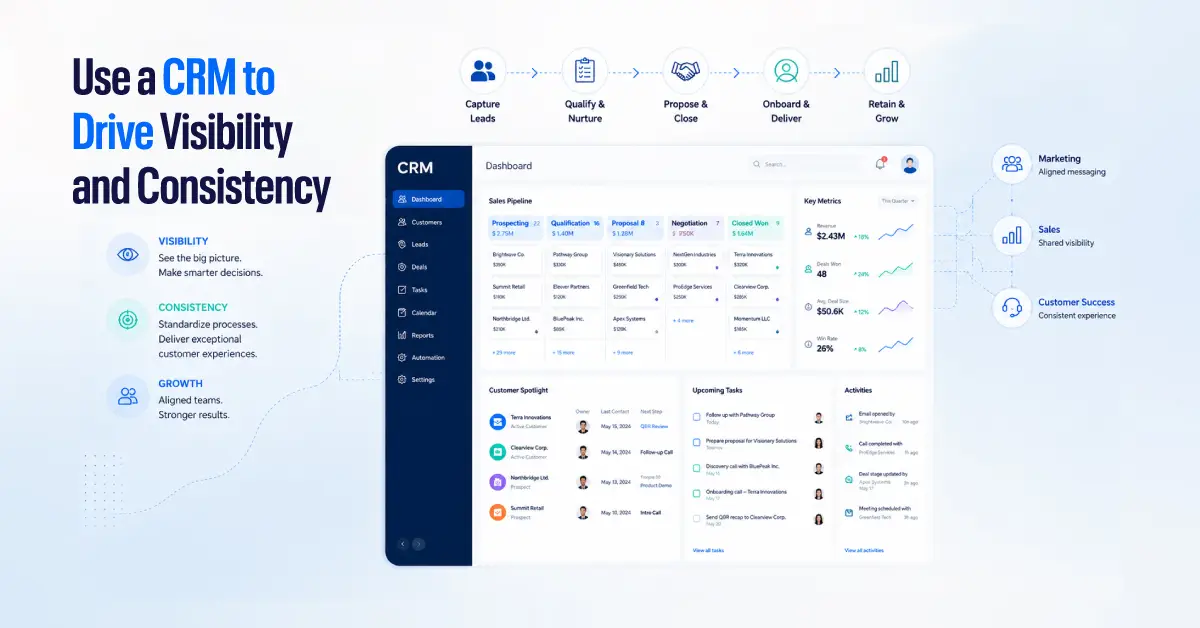
A modern CRM is the operational backbone of every healthy sales pipeline. Without one, your pipeline lives in scattered spreadsheets, sticky notes, and rep memory, which means it doesn’t really live anywhere at all.
A well-implemented CRM gives you:
- Real-time visibility into every deal’s stage and status
- Automated activity logging across email, calls, and meetings
- Customizable dashboards for reps, managers, and leadership
- Workflow automation tied to stage changes
- A single source of truth for the entire revenue team
Pipeline improvement without a CRM is like trying to navigate without a map. Possible, but unnecessarily painful.
11. Automate the Repetitive Work
Sales automation removes the manual drag that slows pipeline velocity and frees reps to focus on selling. Teams that adopt automation see a 14% productivity lift and 12% reduction in overhead, according to recent industry data.
Smart automation handles:
- Follow-up email triggers based on prospect behavior
- Stale-deal alerts when activity drops off
- Lead routing to the right rep by territory or segment
- Task creation when deals advance stages
- Forecast roll-ups across teams and regions
The goal isn’t to replace the human touch. It’s to remove the busywork that keeps reps from delivering it.
12. Use Pipeline Data to Coach, Not Just Report
Pipeline data is your most powerful coaching tool when you use it diagnostically instead of punitively. Most managers review pipeline reports to grade reps; the best ones review them to develop reps.
Look for patterns that reveal coaching opportunities:
- Which stage does each rep consistently lose deals at?
- Which deal types do they win most often?
- Where do their cycles run longer than the team average?
- What’s their proposal-to-close conversion rate?
Match coaching to evidence. A rep who loses at a proposal needs different help than one who can’t move deals from qualification to demo. Pipeline data tells you exactly where to focus.
Common Sales Pipeline Mistakes to Avoid
Even strong teams undermine their pipelines with avoidable mistakes. Recognizing these patterns early helps you protect the gains from the strategies above.
The most damaging mistakes include:
- Inflating deal probabilities to make the forecast look better
- Skipping qualification to chase volume over fit
- Ignoring stalled deals instead of disqualifying or re-engaging them
- Letting CRM data go stale until reporting becomes guesswork
- Treating pipeline reviews as interrogations rather than coaching sessions
- Confusing activity with progress (calls made ≠ deals advanced)
Avoiding these mistakes is often a bigger lever than adopting a new tactic.
Sales Pipeline Metrics You Should Track Weekly
Tracking the right pipeline metrics weekly gives you the visibility to fix problems while they’re still small. Monthly reviews are too late, and daily reviews create noise.
| Metric | What It Tells You | Healthy Benchmark |
| Pipeline Coverage | Pipeline value vs. quota | 3x to 4x quota |
| Win Rate | % of qualified deals closed | 20–30% (B2B avg) |
| Sales Velocity | Speed revenue moves through pipeline | Track trend, not absolute |
| Avg. Deal Size | Revenue per closed deal | Stable or growing |
| Sales Cycle Length | Days from create to close | Trending down |
| Forecast Accuracy | Predicted vs. actual close | 90%+ |
Use these as your weekly pulse check. When any metric trends wrong for two weeks straight, it’s a signal to act.
Final Thoughts
Improving your sales pipeline isn’t about finding one magic tactic. It’s about building a disciplined system where every stage feeds the next with clean data, qualified deals, and consistent execution.
Start with the strategies that address your biggest current gap. If your forecasts are wrong, fix hygiene and stage definitions first. If deals are stalling, tighten qualification and shorten your cycle. If your team isn’t scaling, standardize your process and lean on automation.
The teams that win in 2026 won’t be the ones with the most leads. They’ll be the ones with the cleanest pipelines, the sharpest qualification, and the discipline to coach from data rather than gut feel. Build that system, and predictable revenue stops being a hope and starts being a habit.
Frequently Asked Questions
How often should I review my sales pipeline?
Review your pipeline weekly at the rep level and monthly at the leadership level. Weekly cadences catch stalled deals early, while monthly reviews surface bigger trends across stages, segments, and team performance.
What’s a healthy sales pipeline coverage ratio?
A healthy pipeline coverage ratio sits between 3x and 4x your quota. If your team needs to close $1M, you want $3M to $4M in qualified pipeline to account for normal slippage and lost deals.
How can I tell if a deal is stuck or just slow?
A deal is genuinely stuck when it sits in the same stage for longer than 2x your average cycle length for that stage, with no recent buyer activity. Slow deals still show forward motion, just at a measured pace.
What’s the fastest way to improve sales pipeline quality?
The fastest way to improve pipeline quality is to tighten your qualification criteria and disqualify weak deals aggressively. A smaller, cleaner pipeline almost always converts better than a bloated one.
Do I really need a CRM to manage my sales pipeline?
Yes. While small teams can technically survive on spreadsheets, a CRM becomes essential the moment you need accurate forecasting, automation, or shared visibility across more than one or two reps.